Friendship, Coming to the Chapel on Wednesday, Find Beauty in the Mundane
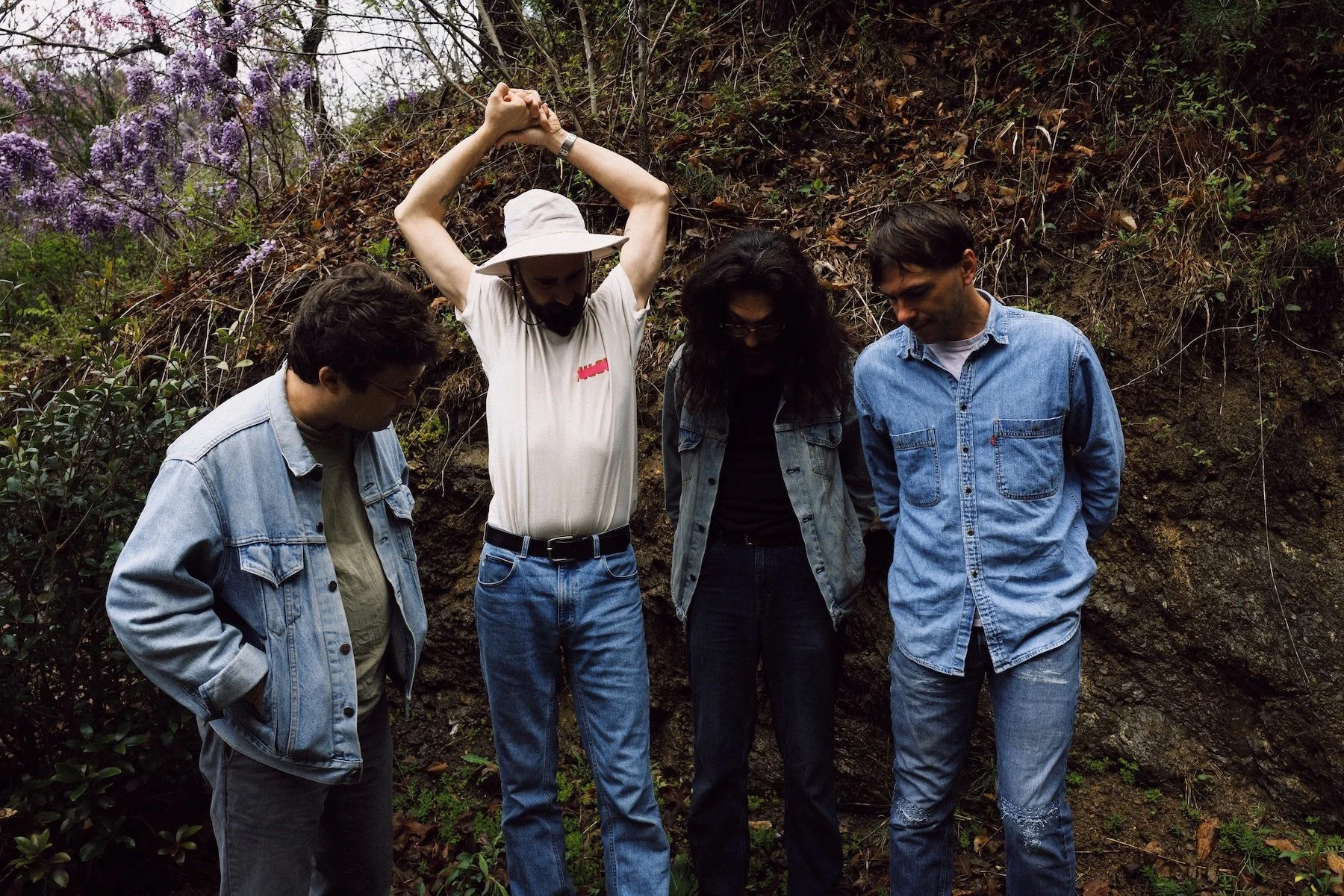
Photo Credit: Charlie Boss
Cheap beer and vodka in tiki cups. City buses and well-worn stoops. Choirs singing angelically at church.
Through the eyes of Dan Wriggins—the creative force behind the Philly alt-country act Friendship—all those elements of life are worth observing. From the sordid to the sublime, they are part of the continuum and spectrum that is daily existence. No minutiae is too granular or mundane to celebrate, and no phenomenon is too awe-inspiring to ignore in favor of blessed obeisance.
“I think songwriting has always been about profaning the sacred, but for me, the inverse has always been more interesting—to sanctify the profane,” said Wriggins. “Taking the garbage that we see all around and finding the strange beauty in it. It’s a way to remind yourself that there is beauty all around us. You don’t even have to search too hard to find it—it’s already there.”
Wriggins beautifully catalogs the commonplace wonders of existence in Friendship’s stellar 2025 album, “Caveman Wakes Up,” a startlingly emotional recollection of daily urban routine. On Wednesday night, Friendship will play selections from that album at the Chapel, with support from local heroes the Reds Pinks and Purples and Cindy.
While Wriggins appreciates the lesser splendors of the world, he’s insistent that he doesn’t walk around in a daze with rose-tinted glasses, glorifying all he sees.
“There's this quote of Mary Oliver that I love, which is, like, ‘this is the first, the wildest and the wisest thing I know—that the soul exists and is built entirely out of attentiveness,’” said Wriggins. “And I definitely aspire to that philosophy, but it’s certainly not all true for me. I feel like people think I have this wonderful observational quality, but a lot of the time it's just me spending hours and hours writing to find the right phrase. I do enjoy being mindful, but I haven’t found the secret to this perfect open perspective or anything.”
On “Caveman Wakes Up,” Wriggins makes most of his perceptive everyday diary inscriptions about his adopted hometown of Philadelphia. The city’s dueling forces of urban grit and charm—at times inspiring and exasperating—are reflected in tracks like “Wildwood in January,” where Wriggins sings about “Nail gun sounds/Summer's gonna come around,” or in “Love Vape,” a song in which a touching moment of someone’s head resting on a shoulder is juxtaposed with a remark about a corner store having “the cheapest cigarettes on Earth.”
No song represents Wriggins ambivalent appreciation of Philadelphia more so than “Tree of Heaven,” a Kinks-like stroll through the city’s gloriously crumbling landscape. In his trademark howl—Wriggins warbled, wounded voice is truly a force of nature—he craggily belts out how “You know you changed me, babe,” a declaration that could be about a relationship, a job or a project, but most likely refers to the city he inhabits.
While the album is endearingly devoted to Philadelphia, Wriggins does manage to single out San Francisco—a city he’s admittedly not too familiar with—in the wonderfully wry “Betty Ford.” A chronicle equally about addiction as it is about life’s endless up-and-downs, “Betty Ford” starts off with Wriggins’ reminiscing about hearing “Mission in the Rain,” by the Jerry Garcia Band before ending with the hilarious/hilariously sad couplet, “I have been everyone/I've been so alone/In my tender loin/In my Lincoln bedroom.”
“I know very little about the Tenderloin—that song really started because I was listening to Jerry Garcia and I wanted to play on the idea of someone being on a Mission,” said Wriggins. “I’m aware that the neighborhood is a little run-down. And that song represents these two opposite feelings of despair and exultation—how we all contain those things. Like, I have the White House and the Tenderloin inside me—we are made up of many different parts.”
In addition to being an acclaimed songwriter—“Cavemen Wakes Up” was lauded in the press—Wriggins is also an accomplished poet. In 2024, he released his debut collection, “Prince of Grass,” which contained roughly 50 poems. While Wriggins songs contain the remnants of poetry, he said the two disciplines don’t typically bleed into one another.
“There is a lot more freedom with poetry, which helps me stay focused with my songwriting,” said Wriggins. “If you think about your desk and the computer being on it right now, could you write a song about that? Probably not an interesting one that anyone wants to hear. But you could write a poem that describes and details that scene in a way that’s compelling and interesting.”
While he might not imbue his own songs with that particular kind of craftwork, Wriggins has an unerring poets’ eye for finding the graceful symmetries of a wondrously hardscrabble existence. There is prose and poetry hidden everywhere in our daily encounters, and like Wriggins, we must look to uncover and celebrate both types, whenever we can.
Show Details:
Friendship with the Reds, Pinks and Purples and Cindy
Where: The Chapel
When: 8 p.m., Wednesday, July 22
Tickets: $27, available here.