Broken Dreams Club Interview: Friko
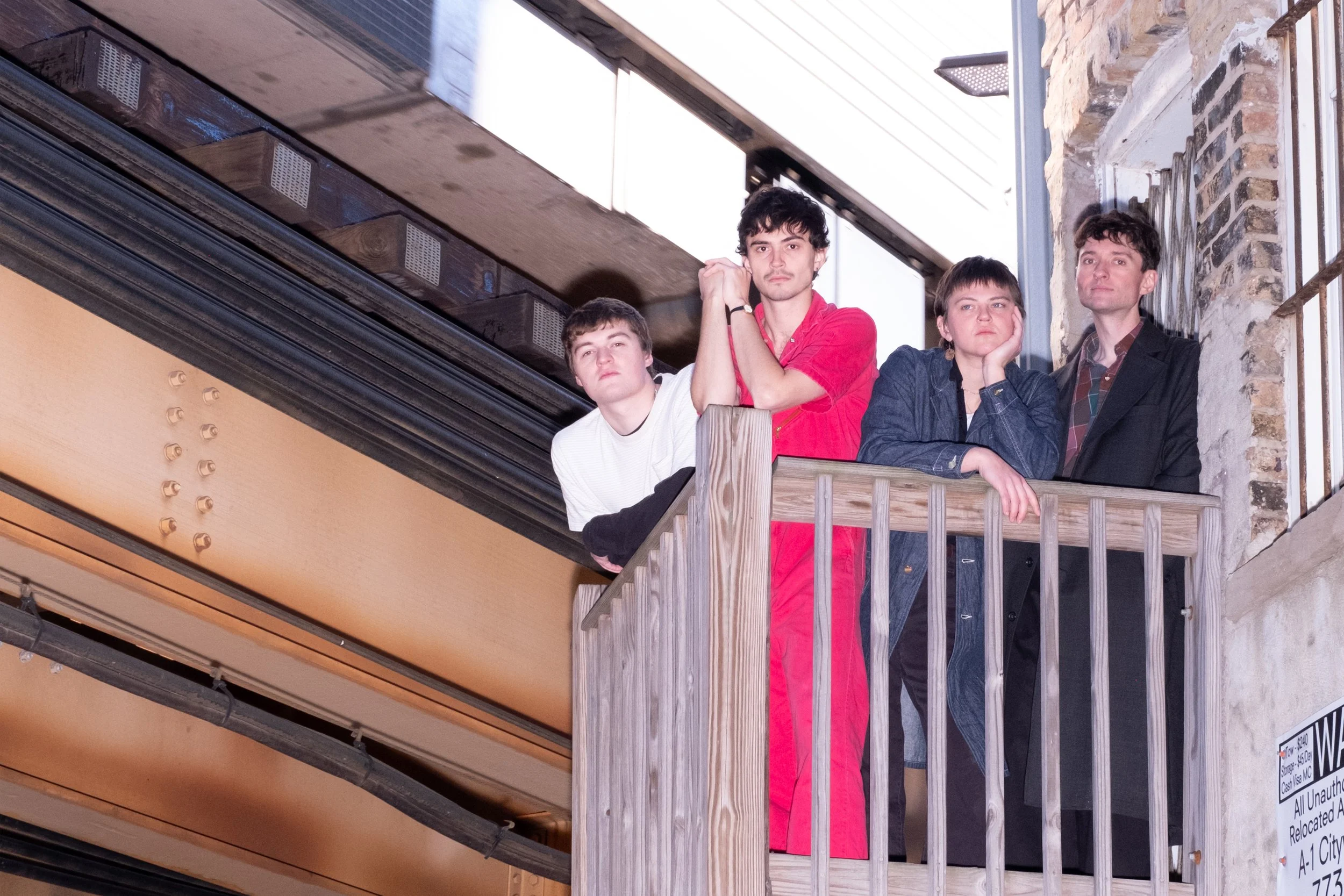
Photo Credit: Adam Powell
After putting out one of the best albums of 2024—and one of the best debuts in recent memory—with “Where We’ve Been, Where We Go From Here,” the Chicago-based band Friko came into this year with huge expectations.
Fortunately, the four-piece unit more than delivered with the release of “Something Worth Waiting For,” a compendium of anthemic and inspiring indie rock treatises that chronicle the highs and lows of growing into one’s own. Very much in the vein of classic “life on the road” albums, the record captures the glorious ecstasies of a life in motion—whether it's witnessing a hot air balloon take off while sleeping in a parking lot of navigating a bike on ice-covered streets.
“Something Worth Waiting For” also details the listlessness and ennui that permeates a generation growing up in an age of Trump, climate change and AI, but the record has a beautiful beating heart—one that ultimately carries a message of hope.
Prior to the band’s September 21 show at the Rickshaw Stop, Broken Dreams Club spoke with Niko Kapetan, the chief songwriter and founding member of Friko, about his inspirations for the new album, working with the legendary indie rock producer John Congleton and surrounding yourself with people who make you smile.
Read more here:
So you guys are in the midst of this big American tour. I think you’re somewhere in Texas at the moment? How are these latest string of shows going?
They've been really wonderful. It’s been our second headlining tour since the second album came out in the states and I'm really looking forward to getting to the coast. We are just really in love with our live show now. I think it's head and shoulders above where we were last time, and it's exciting for people to see it.
How has the live show evolved, especially now that the band has moved on from being primarily a support to act to a headliner?
We travel with our soundboard now, so that adds a level of consistency to each one of those shows. Our monitors are all doing the same thing now, and we’re just a better band because we literally sound better in our ears. And we feel more energy from the crowd because of that. We were home for like six months not touring after the first record came out because we're so burned out, and during that time, we were always rehearsing and writing. So we had a lot of time to get better as a unit.
Prior to his American jaunt, you all were in Europe, and really for the past three years you have been touring almost nonstop. You’ve been to China, Japan, Taiwan—are you all pretty much game to go anywhere at this point?
We’re at that point where we're not too selective because we're still trying to explore everything as much as possible, especially when it comes to going to different countries. We just played in Taipei City this time, which was wonderful. I had some of the best food in my life there and that show was completely sold out. All the festivals in Europe were great this year—we just played a show in Italy that was maybe our favorite show ever. We’re seeing some of our biggest crowds ever, outside of our hometown shows in Chicago.
China and Taiwan are definitely off the beaten touring path. How did those shows come about?
We played Fuji Rock for the first time in July, and I think there were a lot of Chinese folks there. I guess we got noticed on RedNote, the social media site there, which helped us build up this really great following. We got an offer from a local promoter to play there, and we were just like ‘sounds cool!’
This kind of itinerant life from touring plays into your creative output, right? “Something Worth Waiting For” has this very nomadic feel to it. There are so many songs about travel and movement—"Choo Choo,” “Hot Air Balloon,” Dear Bicycle”—and even all the imagery of you all on bikes gives this feeling of constant motion. Is it impossible not to write about “life on the road” when that is such a prominent part of your existence?
Yeah—setting is always a big thing for writing music. We’re gone for months and you just pick those things up. “Hot Air Balloon,” was written about an experience we had on tour that was really impactful. Just sitting on a train or sitting in a van and looking out the window—those can be incredibly emotional moments for me, personally. When the first album came out, it was really from the experience of a local band, and obviously that experience has changed for us since then.
“Where We've Been, Where We Go from Here” is one of my favorite albums from 2024 and one of the best debut albums I’ve heard in years. I think for many people, the expectations for this album were exceptionally high, and you all definitely delivered. Did you notice additional pressure for this record than the debut, particularly given how warmly received that first album was?
Kind of. But I think when we all got back home, we all understood that it takes a certain amount of discipline to make music your career. And if you’re working on music as much as you can, you kind of block everything out—that’s all you really can do. And then you get to the point where you have enough songs to make a record. That’s just how it goes.
And the sophomore slump is a real thing for a reason. You seemed to pour so much into that first album—it’s essentially your entire life distilled into nine songs—with, I’m guessing, no real assumption that it would be listened to by a lot of people. How did you recalibrate for the follow-up album, knowing that you have to find new material and that there is a built-in audience now that is eager to listen to this record?
Adding [bassist] David [Fuller] and [guitarist] Korgan [Robb] to the lineup—having new members and people to work with, was a big part of that journey. And also just wanting to make new music constantly helps. You get to the point with the old music where you might still feel a connection to it, but you constantly need something to fill you up and feel more relevant to you. That first record covered everything in our life before that point, and the second record is everything. It’s obviously a more condensed part of your life, but I also think it’s just as interesting in its own right.
You mentioned David and Korgan being full time members. How did that evolution come about—from being just you and [drummer] Bailey [Minzenberger] to officially anoint David and Korgan into Friko?
It was all very natural. They were playing live with us and then we started arranging these live songs all together. We just all knew that this was the band now.
And for this album, you worked with John Congleton, who's one of the most revered indie rock producers around. How did you come about connecting with him, and what was it like recording with him?
We got word from the label that he was into the first record, and we all thought, ‘oh wow, that’s big.’ And so we were with him and it was just an amazing first experience. He’s a laidback guy, but he’s also a little crazy in a great way. He’s a great person, though. He keeps it simple, and I think that’s good for artists, because we need to know when to go and when to stop, and he’s always on top of that.
“Where We’ve Been, Where We Go From Here” felt like it had all the kind of urgency and immediacy that I love in an album—this idea that the stakes are so high—and I love that Something Worth Waiting For starts out with “Guess,” which has the same kind of urgent, manic energy. Was that an intentional decision to open the album with that track—to keep the momentum from the debut?
We kind of immediately knew it would be the opening the record because it just felt it didn't work anywhere else, based on our live shows. We just started playing that song first for our shows and we could see right away that it fit perfectly as an opener.
There are so many epic songs on this album, but “Seven Degrees” really feels like the statement piece of this record—a foundational part of the album. I love Friko because you incorporate so much of my favorite indie rock sounds, but this song in particular feels inspired by classic rock acts, most notably the Beatles. Were they an influence on the album?
The Beatles and David Bowie were definitely big influences. I grew up listening to those kinds of acts and they will always be a part of me. So much of how I think of melodies and chord progressions can be traced back to bands like the Beatles. When it comes to production, they’re a huge influence as well. It’s impossible for them not to influence my writing.
The title track seems to revisit many of the themes you touch upon in the debut album—this sense of waiting to be inspired, of hoping to be hopeful. Not to get too mordant here, but as a young person, coming of age in the time of Trump and climate change and fucking AI, how difficult is to be optimistic about the future?
I think that for anybody, when you're living your actual day-to-day life, that's all that you're experiencing. It’s the kind of thing where you have to focus on what’s around you. Your happiness in so many ways is dictated by the people around you. If you surround yourselves with good people and create the settings and opportunities that you want to aspire to in your own life, you can make it through the day. I think that’s the only way to do it, really. And stay off social media. I’m done with that now.
And I love that “Dear Bicycle” closes out the album. It’s really a song unlike any other in the Friko catalog—very amorphous and winding and nonlinear. Again, going back to track sequencing—was it deliberate to end with this song, as a way of maybe previewing the possibilities for the next album?
Definitely. That song really is a reflection of our live show. When we play that song live, it goes in this loop that you could really extend forever. And we’ve been doing that in our live show—just improvising more and more—dragging out the song for as long as possible to see where it goes. I think we definitely want to be more open-ended moving forward, not just with the music, but for me personally, with lyric writing as well.
I wanted to talk about Chicago, which has this really amazing young indie rock scene. Friko, Lifeguard, Sharp Pins, Horsegirl—the City just seems to be brimming with creative juices at the moment. How much inspiration do you get from your fellow local artists?
There was definitely an element of influence, because when we started out, we were all playing together all the time. None of us were touring. But now it’s so great, because we see these guys out on the road together. We just played a show in San Sebastian, Spain with Horsegirl that was absolutely amazing. It was such a unique experience and it was so great to see how good they were. All these bands are getting better and better at what they do. We’re all doing our own thing, the best that we can do, and I think that’s pretty inspiring.
Looking ahead to this September 21 show at the Rickshaw Stop. Are you excited to be coming back to San Francisco? Do you feel like you always get a nice reception here?
We can’t wait. We love San Francisco and, like I said, we’re just getting better and better live. Not that our last time wasn’t good, but I think we’re going to be a lot better this time around.
You all are basically touring through the end of the year. Do you have live plans for 2027? Or will you be getting back to the studio soon for LP3?
We will be writing this in the winter because we don’t really tour during the winter anyways. And then we will be going abroad for some more shows in 2027 as well as writing and recording our next album. We’re planning on staying really busy and I think we’re all just excited for what’s next.
Show Details:
Friko with villagerrr
Where: Rickshaw Stop
When: 8 p.m., Monday, September 21
Tickets: $33, available here.